
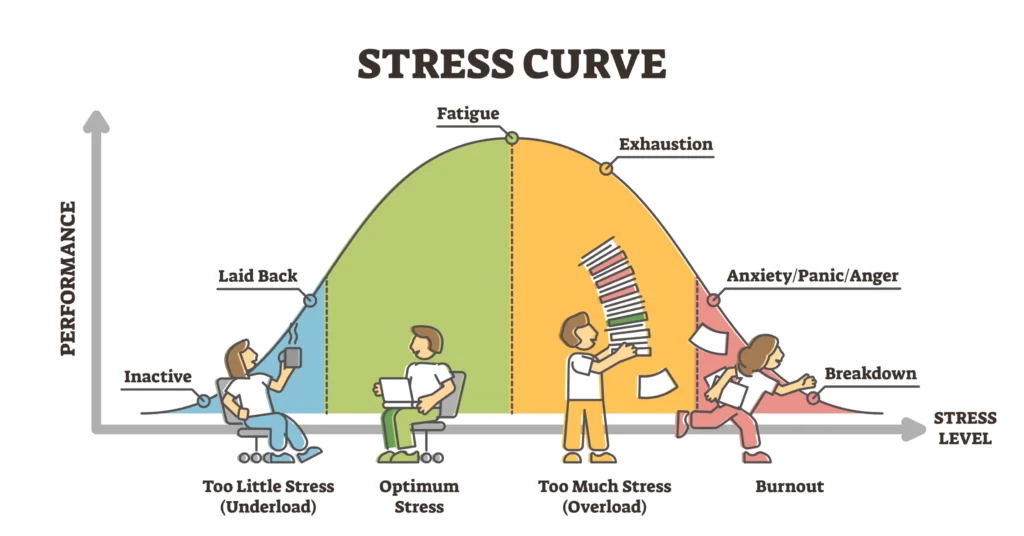
Dubai’s workplaces are not struggling with ambition or capability. They are struggling with sustained human energy.
On paper, performance is strong. Businesses are scaling, teams are delivering, and leaders are pushing for growth. Yet across industries , from healthcare and finance to consulting, tech, and education; there is a visible shift in how people are functioning.
Focus drops earlier in the day. Decision fatigue appears faster. Recovery between workdays is incomplete. High performers begin to feel replaceable not because they lack skill, but because they lack capacity.
This is not a motivation problem. It is a physiological one.
And it is now a measurable business risk.
The UAE Burnout Data Is No Longer Ignorable
Recent regional research shows:
- 89% of UAE residents report experiencing stress
- Almost 1 in 2 professionals are at risk of burnout
These are not isolated wellbeing concerns, they directly affect productivity, retention, and healthcare costs.
According to research on workplace mental health in the region, poor psychological wellbeing costs businesses in the UAE approximately AED 14 billion every year in lost productivity.
For HR and leadership, this changes the conversation. Corporate wellness is no longer an engagement activity. It is a performance protection strategy.
Stress Is No Longer an Emotional State. It Is a Cognitive Performance Issue
When the nervous system remains in a prolonged stress response, the first functions to decline are:
- sustained attention
- working memory
- emotional regulation
- complex decision-making
This is well established in neuroscience. Chronic activation increases cortisol, which directly affects the prefrontal cortex, the part of the brain responsible for strategic thinking, impulse control, and problem-solving.
Research from the American Institute of Stress and Harvard Business Review has consistently linked chronic workplace stress with:
- reduced productivity
- higher error rates
- lower engagement
- increased absenteeism
In high-stakes work environments like Dubai, this translates into slower execution, more rework, strained communication, and leadership fatigue.
Why Dubai’s Work Culture Amplifies Fatigue
The UAE has one of the most dynamic and competitive professional ecosystems in the world. That growth comes with structural pressure:
- global time-zone alignment
- high cost of living
- performance-driven talent market
- limited true recovery cycles during the year
Many professionals are operating in a continuous output mode while their physiology never fully shifts into recovery.
This creates a workforce that looks high-performing but is functioning at a reduced cognitive and emotional capacity.
The Financial ROI of Corporate Wellness Is Now Proven
Organisations that implement structured wellbeing strategies see measurable business outcomes:
- Up to 25% reduction in absenteeism
- Higher employee retention
- Stronger productivity
- Lower healthcare costs
A report on workforce wellbeing in the region also shows that investing in employee health can significantly reduce operational losses and improve long-term performance.
This is why corporate wellness in Dubai is moving from HR to the C-suite.
Because it directly affects:
- profitability
- talent retention
- decision quality
- organisational culture
High Performers Are the First to Burn Out
In high-achievement environments, the most reliable employees are also the most physiologically depleted.
They:
- override early signs of fatigue
- normalise pressure
- link self-worth to output
They continue to deliver until cognitive clarity drops, health forces a pause, or they exit the organisation.
Replacing experienced talent in the UAE is significantly more expensive than sustaining their performance capacity.
Corporate Wellness in 2026: From Perk to Performance Infrastructure
The companies seeing real returns are not offering occasional wellness events. They are integrating regulation into the workday through:
- micro-recovery protocols between meetings
- movement for cognitive reset
- breathwork for state management before high-stakes conversations
- leadership energy management
Because performance is not driven by time spent working. It is driven by the quality of the internal state people are working from.
Why This Matters for HR and Business Leaders in Dubai
The real questions in 2026 are no longer:
- Are employees satisfied?
- Did we run a wellness initiative?
They are:
- Can our teams think clearly at 4 PM?
- Can our leaders make regulated decisions under pressure?
- Can we sustain high performance without cyclical burnout?
That is a business strategy conversation.
The Competitive Advantage for the UAE’s Future Workplaces
In a knowledge economy, the most valuable asset is not information. It is cognitive energy.
The organisations that will lead in Dubai over the next decade will be the ones that understand how to:
- protect human capacity
- build regulated leadership
- create sustainable performance systems
Corporate wellness is no longer about helping employees feel better.
It is about helping companies function better. https://theyogabody.com/corporate/